
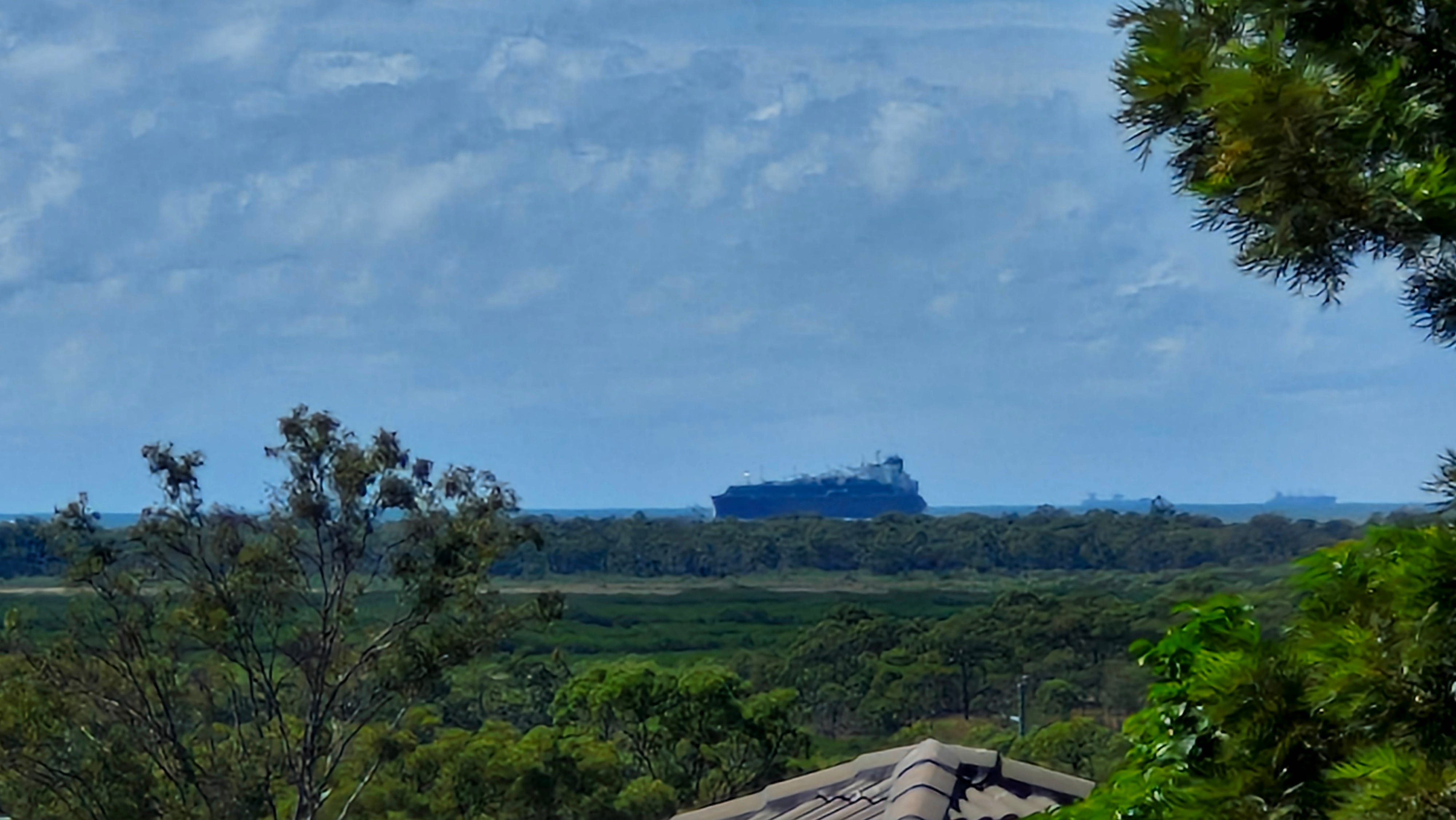
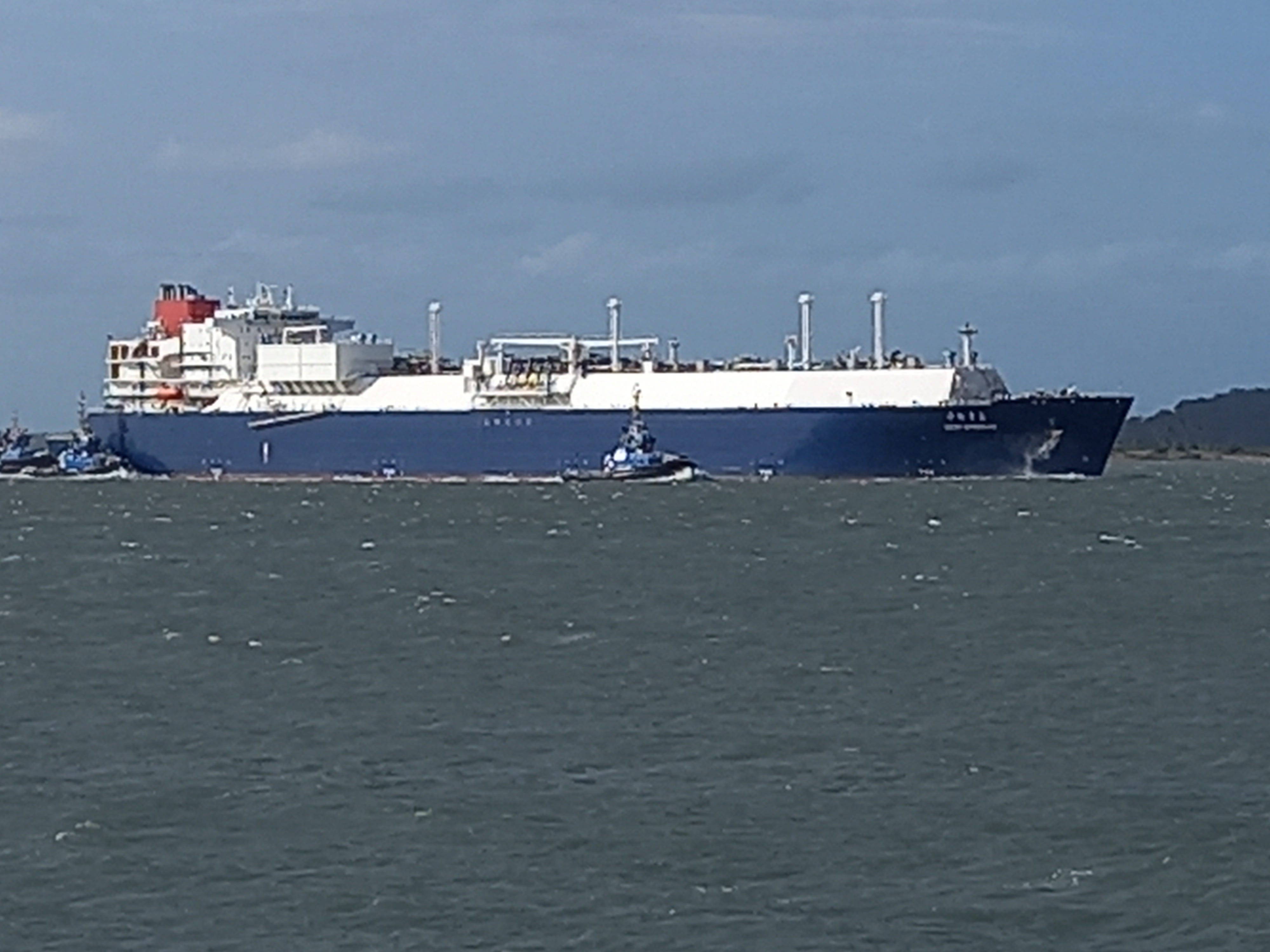
Today, I watched another LNG ship enter Gladstone harbour. Around here we jokingly refer to them as ‘Floating Bombs’ and do our best not to run our dinghy’s into them.
But, to the sailors aboard watching us scoot around the ship, they’re called, ‘Floating Prisons’. Once you’re on, you rarely get off.
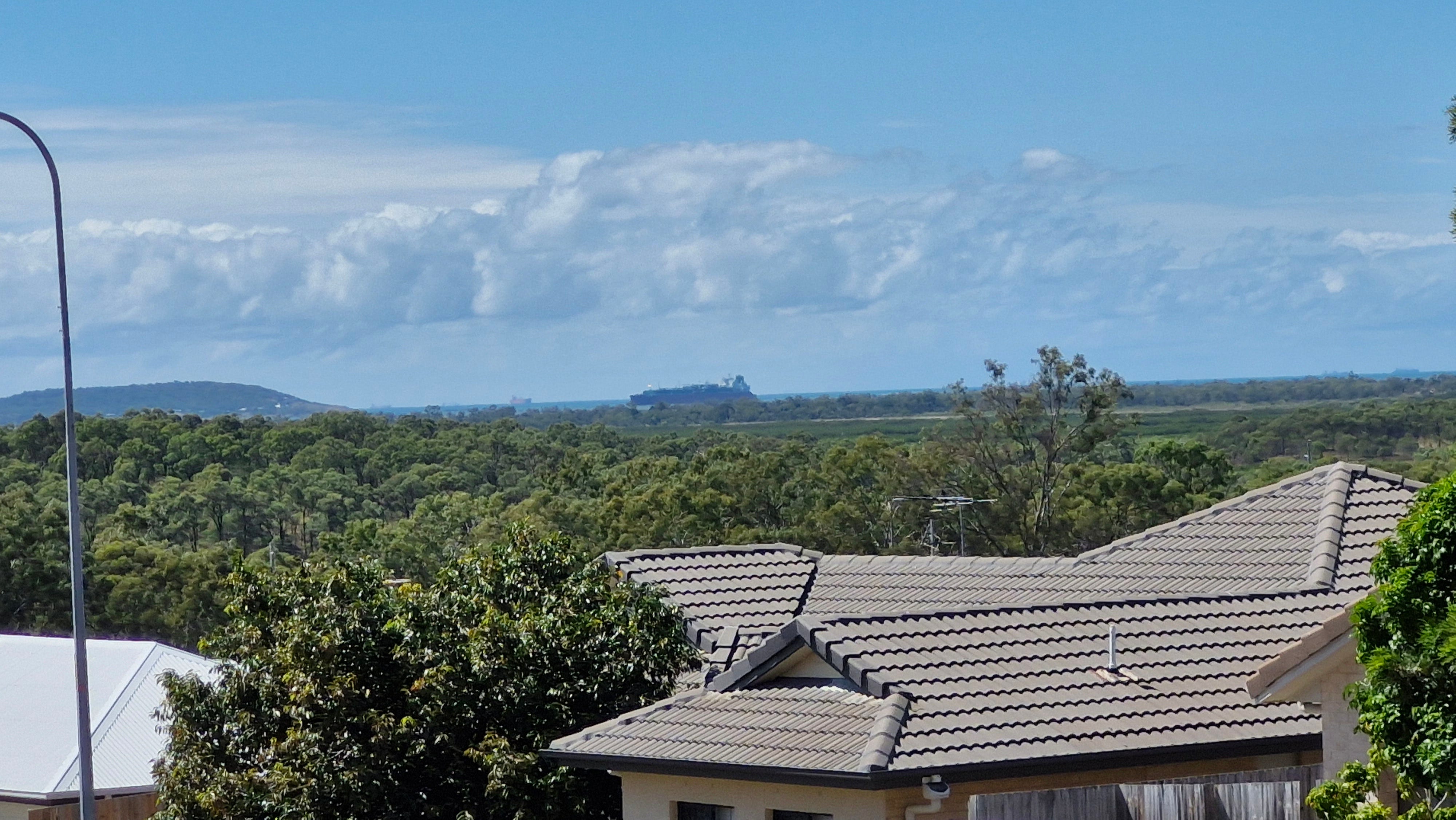
In a few days’ time, all going well, the nose of that ship will be pointed toward the Coral Sea, and it will gracefully float back out of the harbour loaded with roughly 3 × 10¹⁵ joules of gas jammed into its’ hull.
Which is, 3,000,000,000,000,000 joules, or three million billion joules, or three quadrillion joules or (if you’re still reading?) 3 petajoules of energy.
‘Oh, that’s nice,’ you say as your eyes glaze over.
Alright, let’s break it down into something that would be more useful for the average harbourside Ship Spotter.
3 petajoules is the energy found in 510,000 barrels of oil (BTW: here in Oz, we use a shade over a million barrels of oil per day, so that’s half our nations’ oil energy use in one ship!)
The equivalent energy found in nearly 5 coal ships.
Enough to power a large city for a couple of weeks. E.g.: the city of Brisbane uses approx. 40 gigawatts of power per day, the energy in that one ship (800 to 1000 GW hours) could run Brisbane for a month.
(Just out of interest, the Gladstone power station can pump out 1.7 megawatts of electricity, most of which is chewed up by the nearby Boyne Smelter. How much? Oh, about two times what Brisbane would use. How would you like their quarterly power bill?!)
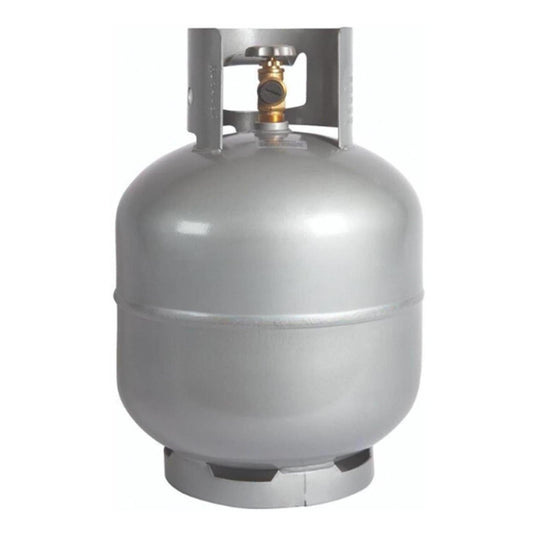
Anyway, back to our gas ship (before it drifts away), to bring the figures a bit closer to home, it contains enough gas to fill nearly 7 million, 9kg bottles of LPG, like the ones you’d normally pick up at Bunnings for the ol’ family BBQ (which contains 430 MJ, or, 430,000,000 joules), divide that into 3 petajoules and you should get:
7 million gas bottles!
(Note: there’s 27 million Aussies scattered around this continent, I don’t think we have nearly four gas bottles or BBQ’s each. Or, I’m getting stiffed…)
So, if we pay roughly $30 to refill a 9kg bottle, that ship would be carrying $210 million of gas.
Let the record show, the gassy cargo is worth (in Aussie dollars) $90 million dollars.
Out of that, the gas companies pay us $5 to $10 million in royalties, (depending on how good their accountants are).
So, how much are the gas corporations paying us in royalties to fill their (equivalent) gas bottles you might be wondering?
I hope you’re wondering this, because I really hurt my brain working it all out:
About $3 per bottle.
Folks, how would you like to be paying a measly three bucks to refill a big bottle of gas at Bunnings right now?
So,
Are We Getting Screwed on Royalties?
Ok, a bit. As I said, that ship sailing by is worth $5 to $10 million to the Oz government.
But, the cost of extraction, processing (pretty significant), maintenance, pipelines shipping, financing and depreciation, the occasional lawsuit etc. will drag anything from $25 to $50 million out of the profit margin.
So, cargo profit will be anything between $30 or 45 million.
Note: right now, thanks to Donny’s Epstein Distraction Action, gas prices are soaring on the worlds’ markets, so, let’s just say my figures are pretty conservative.
Now, multiply those figures by 365 (one ship sailing each day from Gladdy Town) and you arrive at the sort of profits that would make Scrooge McDuck wet his pants before going into an ecstasy coma.
What if We Had Norways Royalty System?
Well, yes, if we had the Norway model, which means they not only get royalties, but a share of the profits from the end of the supply chain in the marketplace (because they rather cleverly insisted on being a stakeholder) Australia could potentially be raking in an additional $15 to $25 million per ship.
Sadly, we only negotiated royalties based on Well Price. The cost at the head of the supply chain, literally, the meter on the gas pipe leaving the ground.
Not clever Oz.
We really need to do better in future before everything is dug up, pumped out and shipped off. Not only for the benefit of our country and it’s citizens, but for future generations too.
Sadly, I’m not seeing that level of guts from any political party at the moment.
A Bit of Fun!
Gregs’ Snag Quotient
Folks, if each 9kg Bunnings bottle holds about 10 hours’ worth of cooking gas (if you go a bit hard on the knobs on a windy day while overcooking / burning them slightly), then how many sausages can you cook in 10 hours?
Approx. 1kg (12 snags) every 20 minutes.
3kg per hour.
36 snags p/hour x 10 = 360 sausages.

So, if I’ve got this right, on each gas ship:
360 snags per bottle x 7 million bottles = enough gas to cook 2.5 billion sausages per day!
I wonder how much tomato sauce we’d need to… nah… let’s not go there… actually, I did!
If each snag requires 10ml of tomato sauce along its’ length, you’d need another ship filled with 36 million litres of sauce. Which would be enough to fill slightly over 14 Olympic swimming pools!
How much fun is this?!
Want to know how many tonnes 2.5 billion single slices of bread weighs?

Well…
Work it out for yourself, I’m DONE!
Cheers,
Gb